Hospitality Beyond Borders
Autumn Foliage in Gilgit-Baltistan
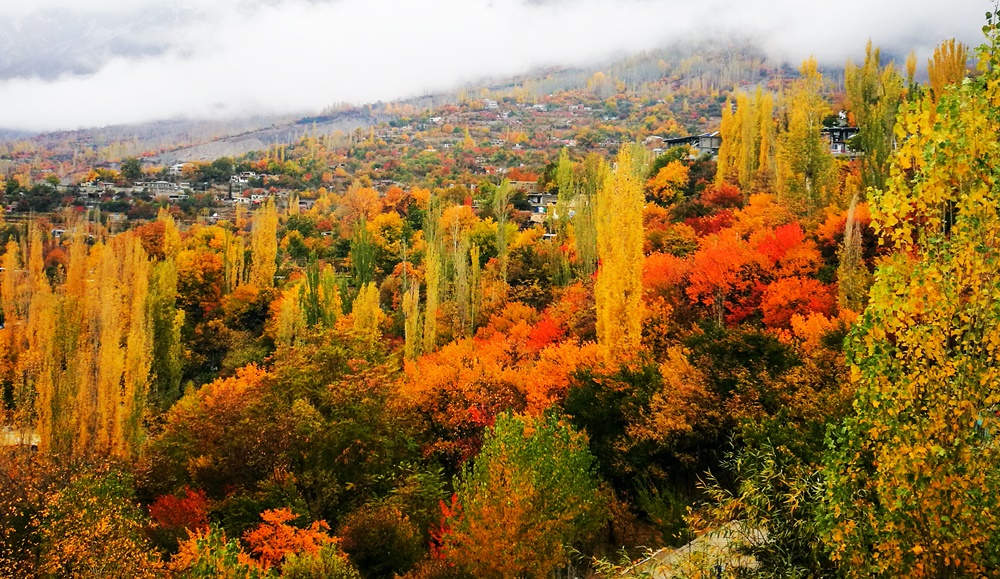
Autumn Foliage in Gilgit-Baltistan: A Different Mountain Every Autumn
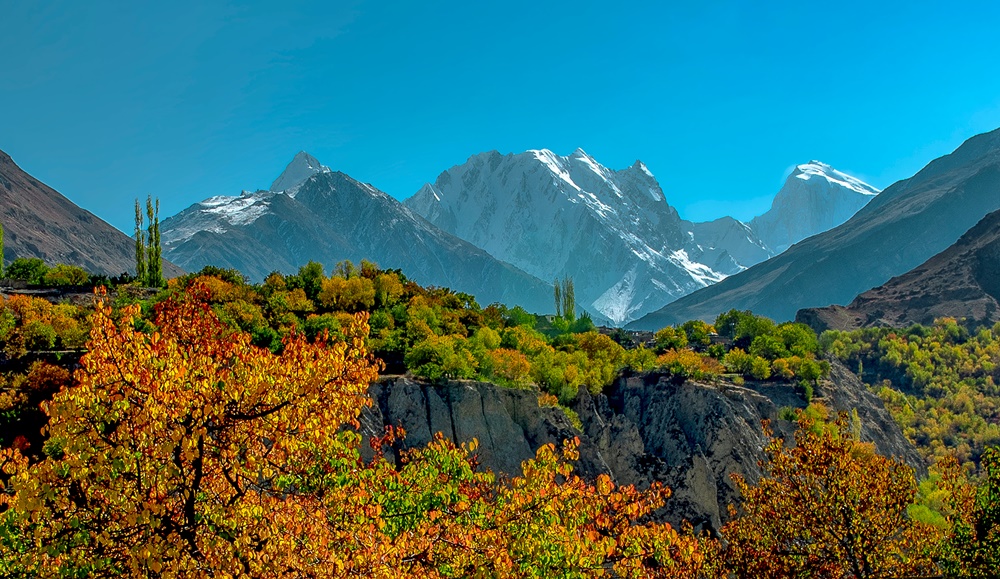
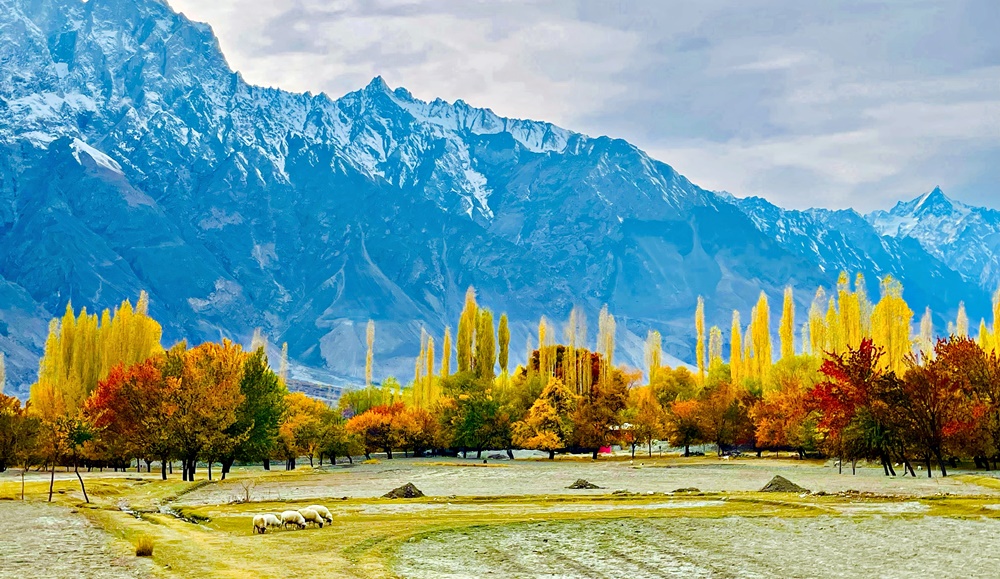
For most of the year, Gilgit-Baltistan is defined by its peaks — K2, Nanga Parbat, Rakaposhi, the Karakoram and the western Himalaya all crowding the skyline. But for a few weeks each autumn, roughly from mid-September through mid-November, the valleys themselves take over the show.
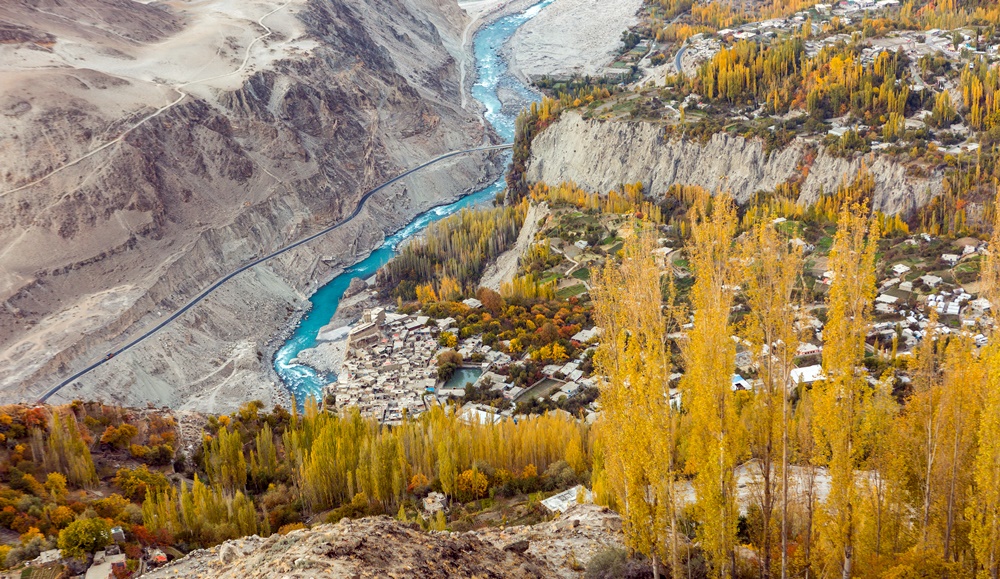
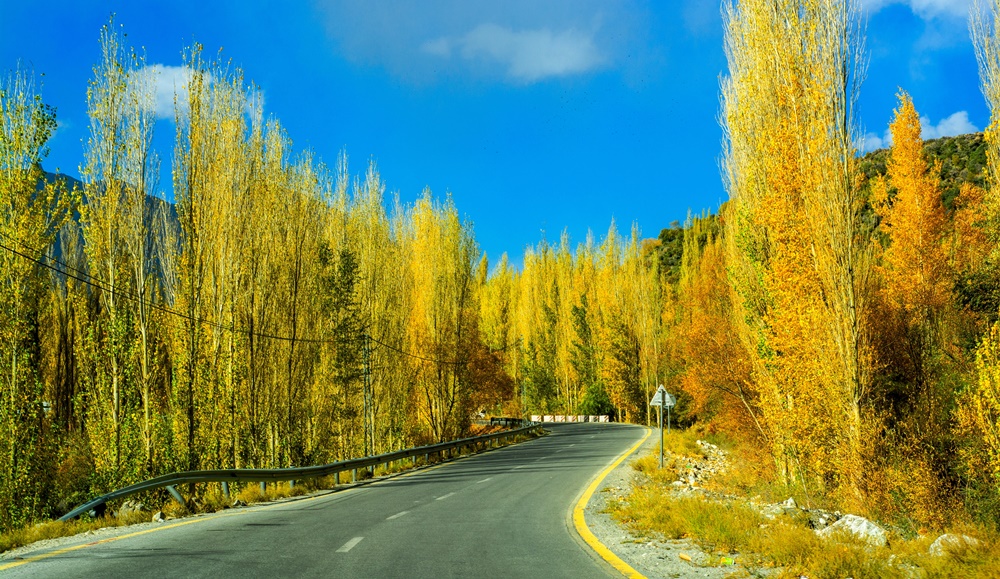
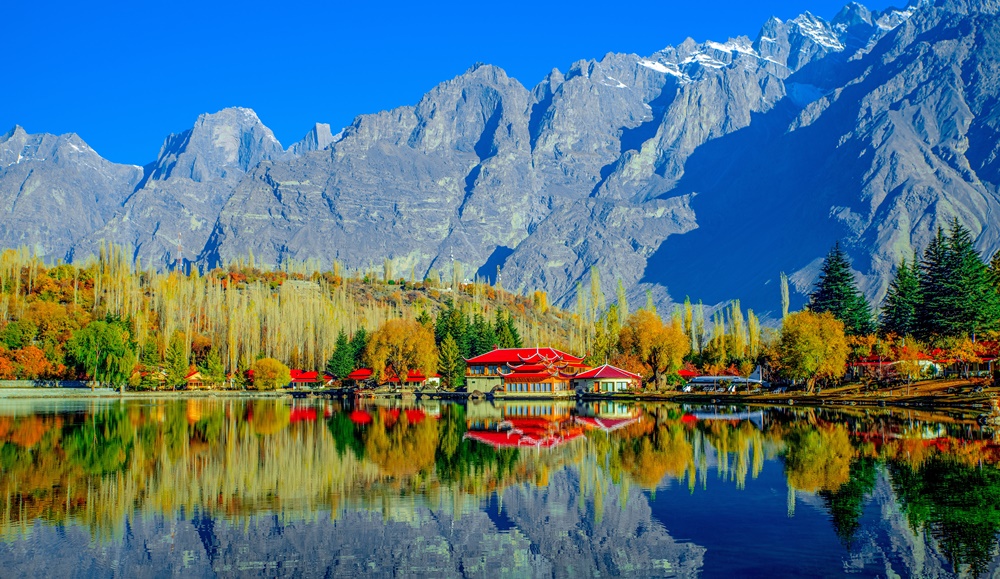
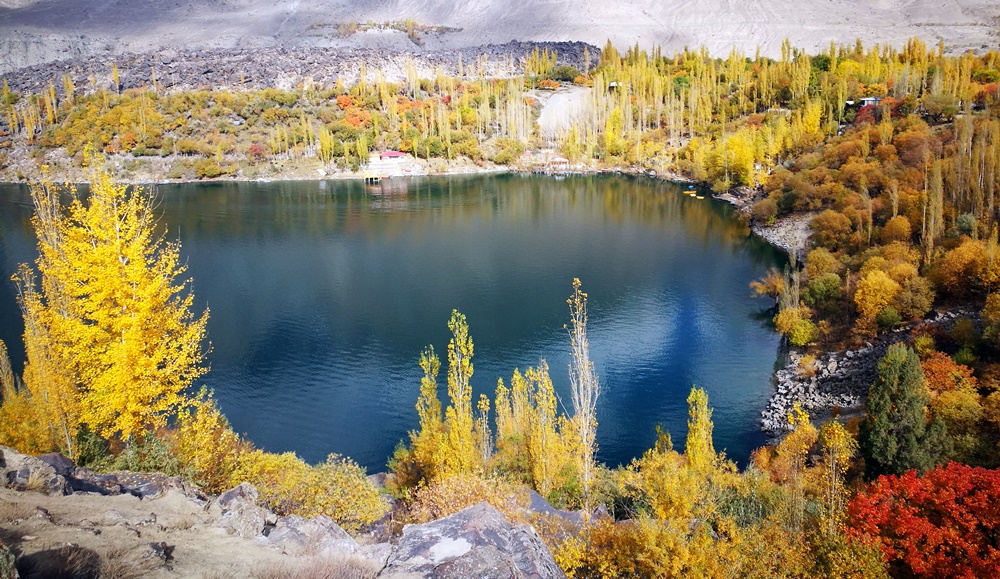
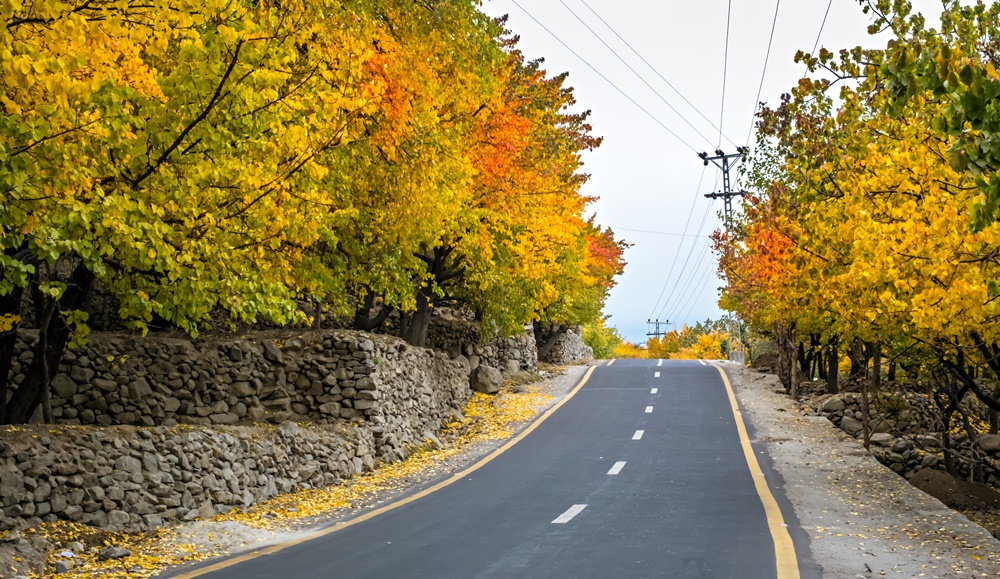
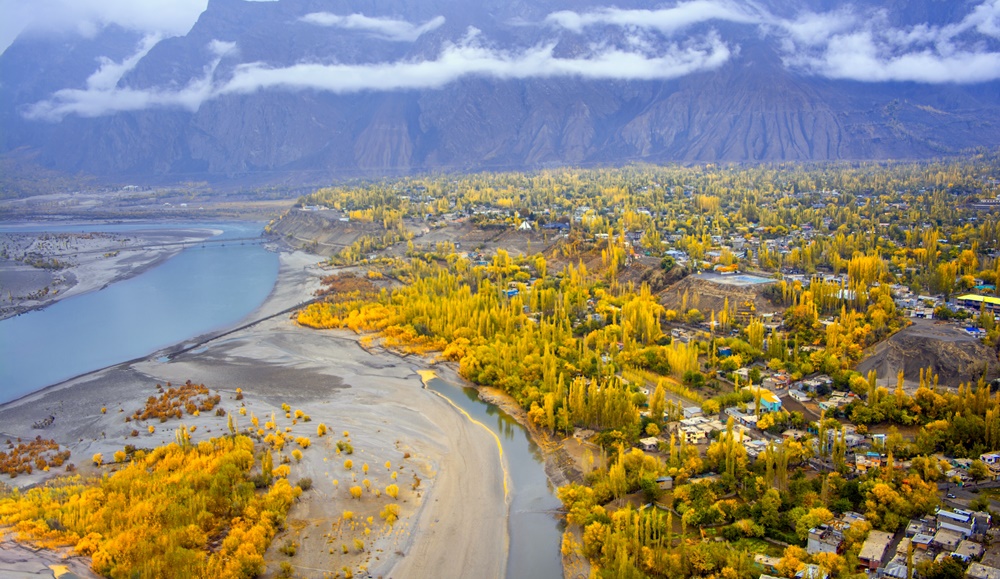
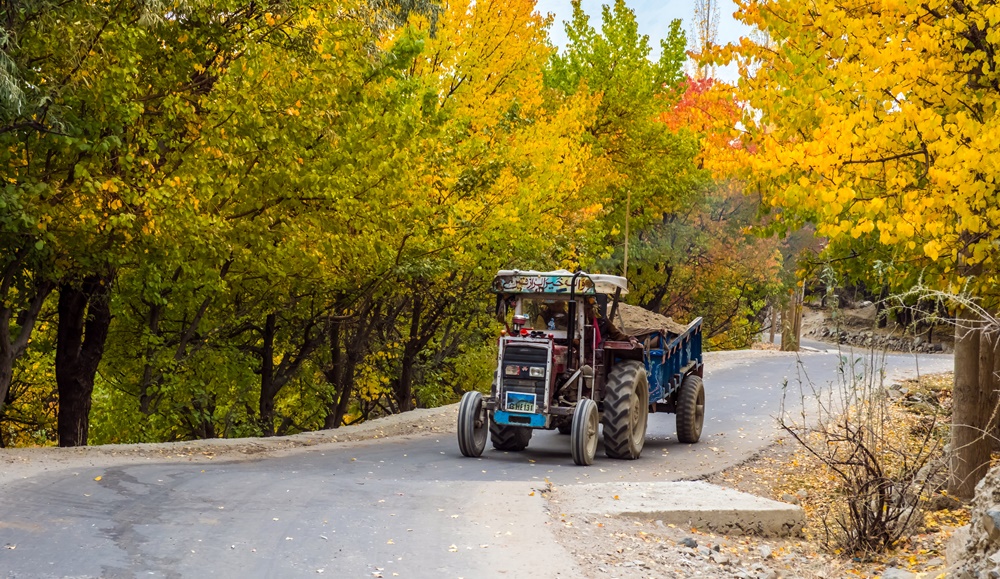
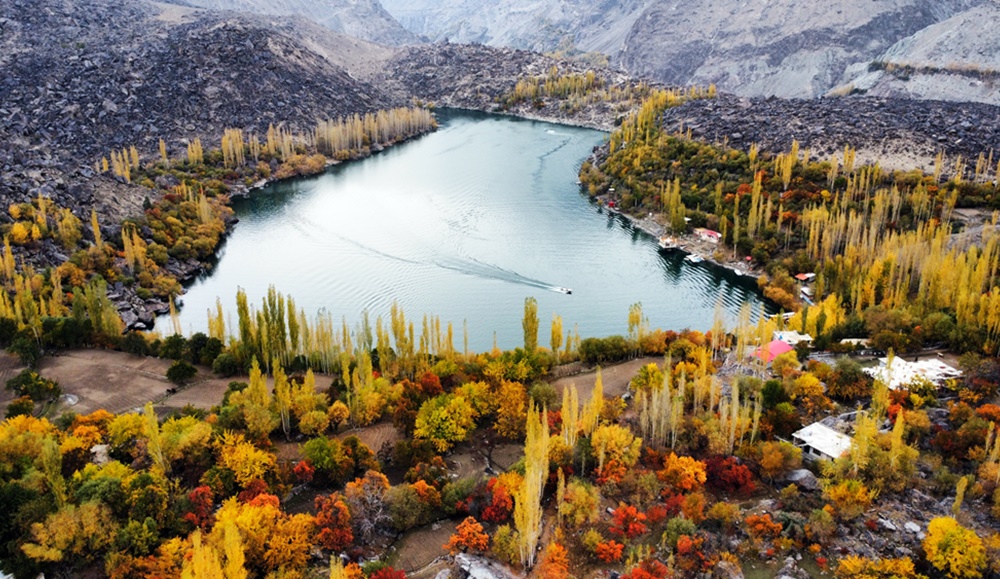
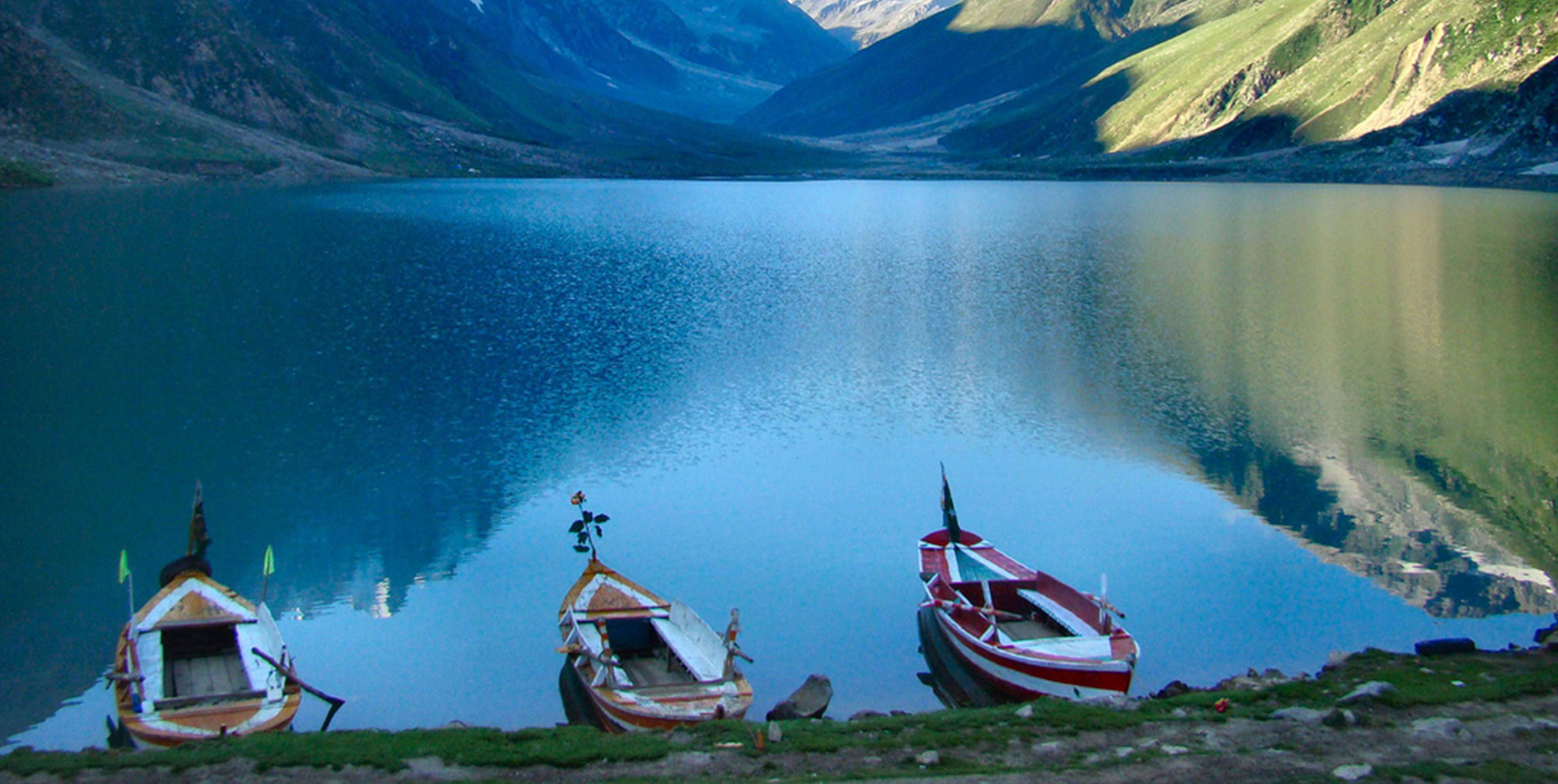
Poplar and willow trees that line the roads and irrigation channels turn a deep, even gold. Apple, apricot, and walnut orchards shift through amber, rust, and crimson, often within the same week. Rice terraces around Shigar and Khaplu ripen to a warm yellow before harvest. And because the air is clearer and the water levels calmer than in summer, the region's lakes — Kachura, Sadpara, Attabad, Phander — turn into near-perfect mirrors of it all, with the first snow already dusting the peaks behind them. It's a short season and a quiet one, since most travel to the north still peaks in summer, which is exactly what makes it worth planning for.
This guide walks through where the colors are most dramatic, what to know about the region's culture, food, and people, the weather and packing list to plan around, and a few points of local etiquette worth keeping in mind — along with sample itineraries if you'd rather follow a ready-made route than build your own.
Foliage timing shifts slightly every year and moves down the valleys as the season progresses — upper valleys like Hunza and Nagar tend to turn a little earlier than Skardu and Khaplu. If the colors are the whole reason for your trip, check current reports a couple of weeks out rather than booking by calendar date alone.
Where the Colors Are Best
Gilgit-Baltistan isn't a single autumn destination — it's a chain of valleys, each with its own character, attractions, and reason to visit. Here's what to expect from each.
Skardu
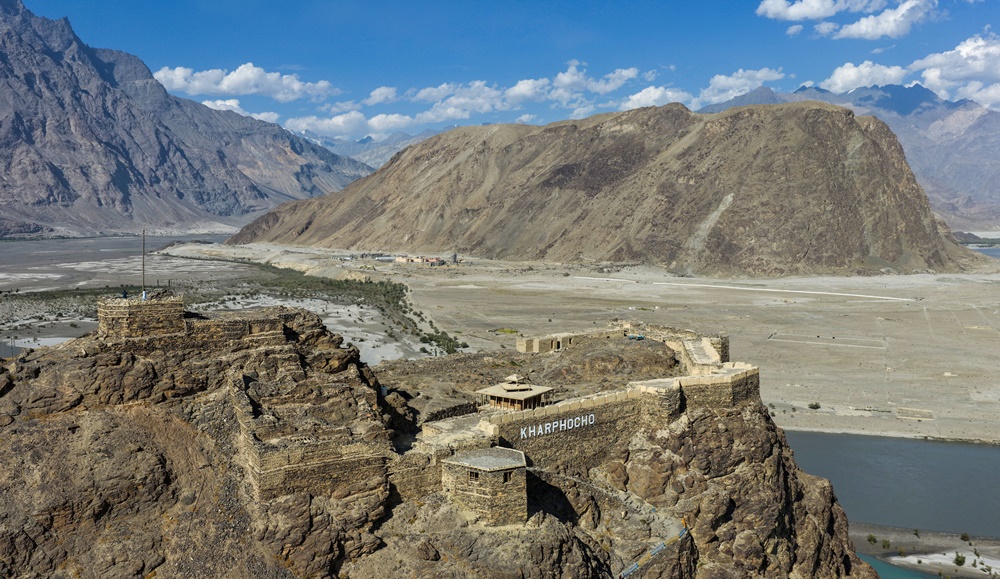
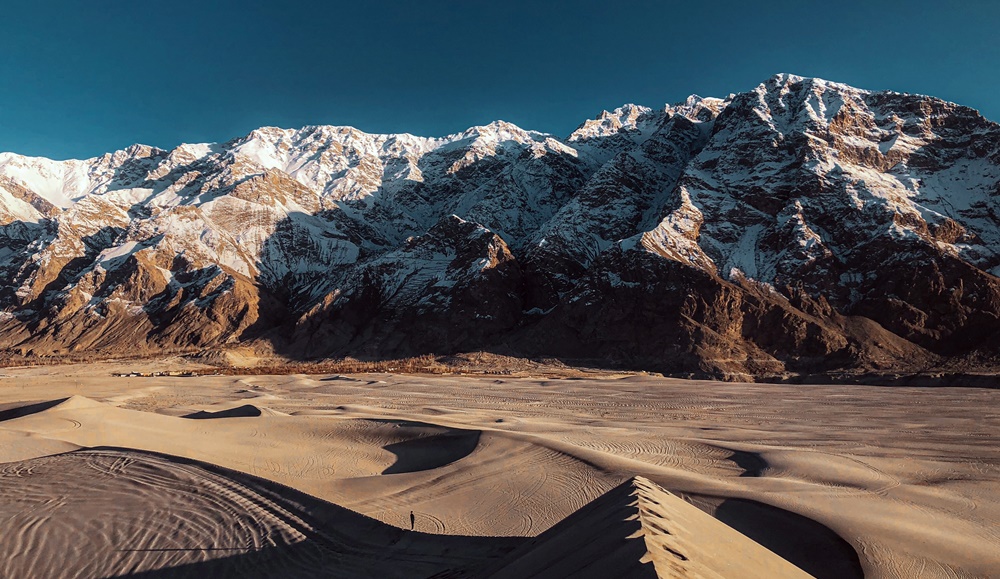
Skardu is the most accessible base for an autumn trip and a good starting point for a first visit to the region. Upper and Lower Kachura Lake (the latter also known as Shangrila) sit inside pine-fringed surroundings that turn especially photogenic once the trees around them color up. Kharpocho Fort, perched on a cliff above the town, gives a sweeping view over the Indus River and the valley below — worth the short climb for the panorama alone. Nearby, the Manthal Buddha Rock is a carved rock face dating back roughly to the 9th century, a reminder that the valley's Buddhist history predates its Islamic present by centuries. Sadpara Lake, glacier-fed and framed by golden hillsides in autumn, is a popular spot to simply sit for an hour. And the Sarfaranga (Katpana) Cold Desert — genuine dunes with snow-capped peaks as a backdrop — is one of the more unusual landscapes anywhere in Pakistan, best visited close to sunset when the light is low and warm.
Shigar Valley
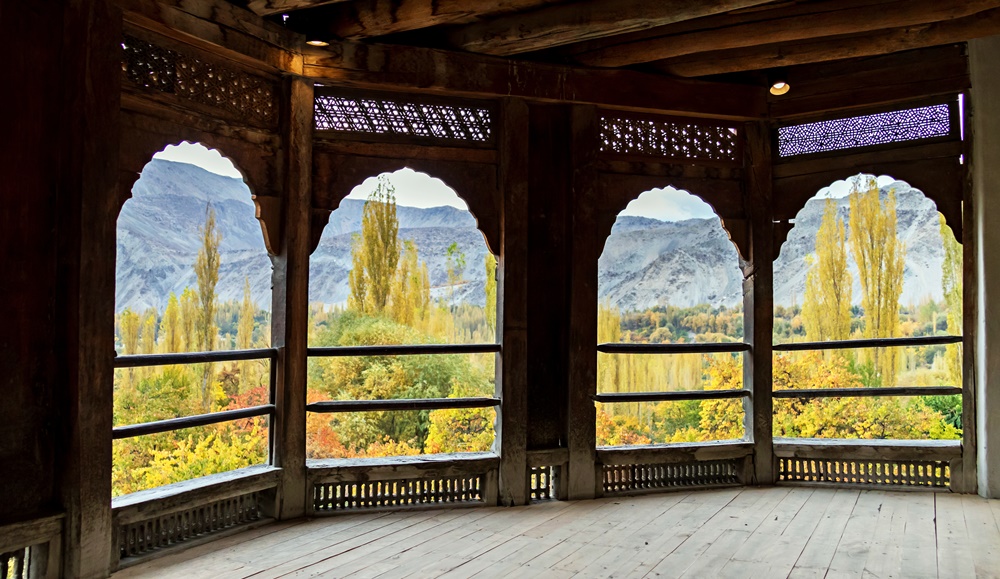
About an hour from Skardu, Shigar trades big-ticket sights for atmosphere. The centerpiece is Shigar Fort (also known as Fong Khar Palace), a beautifully restored royal residence now partly run as a heritage guesthouse, surrounded by stone-and-timber Balti village architecture and mosques that are centuries old. Around it, apricot and apple orchards turn a deep rust through October, and the valley's irrigated fields and terraced farmland make for some of the best slow, on-foot exploring in the region. Shigar rewards unhurried visits rather than quick stops — a couple of hours here rarely feels like enough.
Khaplu Valley
Roughly two and a half hours east of Skardu, Khaplu sees noticeably fewer visitors than Skardu or Hunza, which is part of its appeal. Khaplu Palace, the former residence of the Raja of Khaplu, is now a restored heritage hotel and one of the most atmospheric places to stay overnight anywhere in Gilgit-Baltistan. Close by, Chaqchan Mosque is one of the oldest mosques in the region, blending Kashmiri, Tibetan, and Central Asian architectural styles — a genuinely significant heritage site rather than a passing photo stop. The drive itself, along the Shyok and Indus rivers, is reason enough to make the detour in autumn light.
Hunza and Nagar
Reached via Gilgit rather than Skardu, Hunza is the region's best-known valley and, for many, still the benchmark for what Gilgit-Baltistan looks like. Baltit Fort, overlooking Karimabad, and Altit Fort, older and set above the Hunza River, anchor the valley's history. Duikar (Eagle's Nest) is the classic sunrise viewpoint, with Rakaposhi and the surrounding peaks lined up on the horizon while Hunza's orchards below are still in shadow. Further north, Attabad Lake's turquoise water, formed by a 2010 landslide that dammed the Hunza River, sits alongside the drive toward Gulmit and the striking Passu Cones. Across the valley, Nagar and Hoper swap Hunza's more developed tourism infrastructure for glacier views and quieter mountain villages — a good half-day or full-day addition for travelers who want both the famous view and a less-visited one.
Ghizer Valley
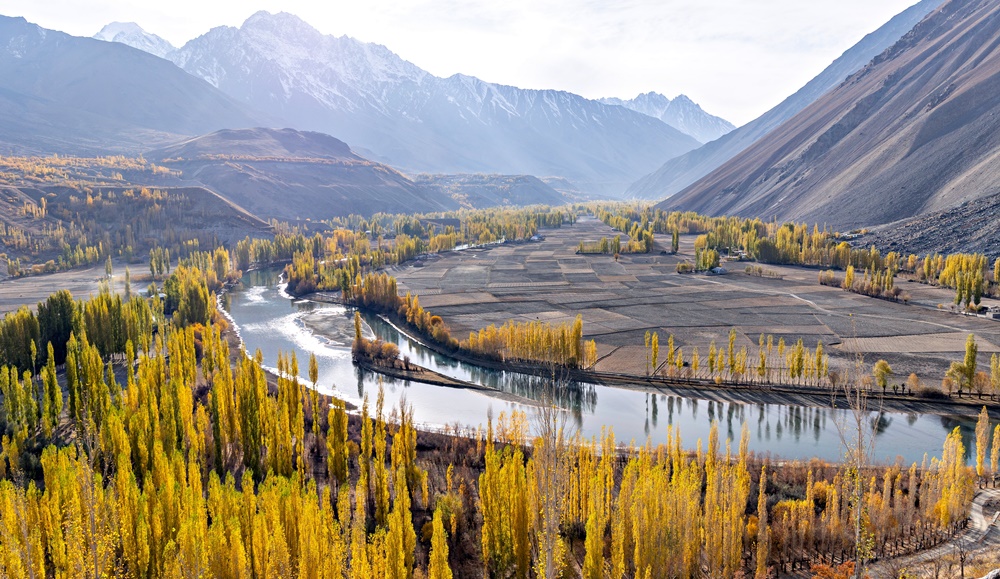
West of Gilgit, Ghizer is the one most itineraries skip — and the one worth adding if your trip allows an extra day or two. Phander Valley and Phander Lake are the highlight: a quiet stretch of alpine river and lake scenery with little of the infrastructure found further east, and correspondingly few other travelers. Ghizer is less about named attractions and more about the drive itself — river valleys, small Shina- and Khowar-speaking villages, and long stretches where there's genuinely nothing scheduled but the road ahead.
Culture and Heritage
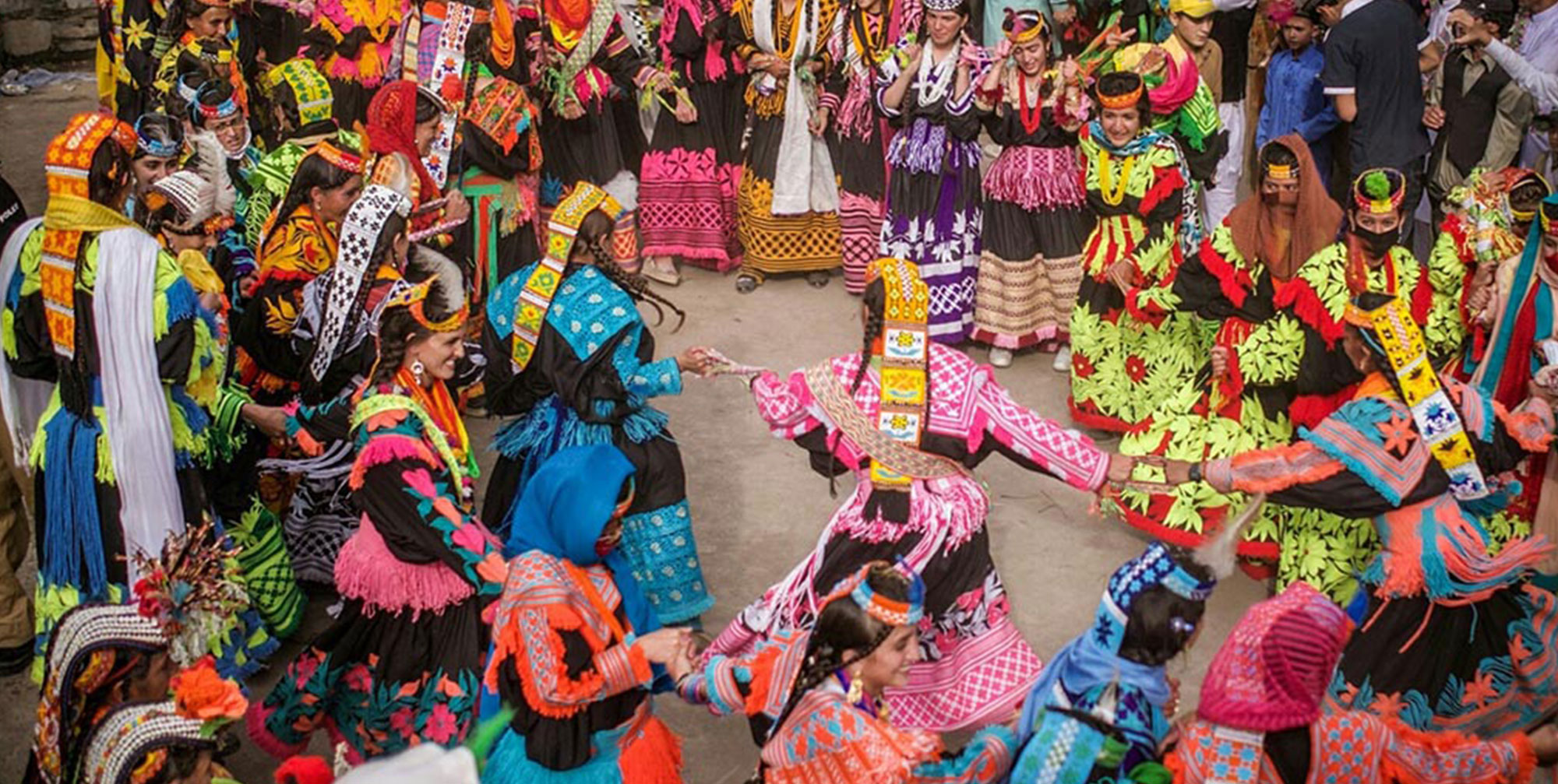
Gilgit-Baltistan isn't culturally uniform — it's a region of distinct communities across its valleys. Baltistan (Skardu, Shigar, Khaplu) has strong historical and cultural ties to Tibet and Ladakh, visible in its fort architecture, the Balti language, and sites like Chaqchan Mosque and Manthal Buddha Rock. Hunza and Nagar are historically Burushaski-speaking principalities, each with their own former royal families and forts. Ghizer is predominantly Shina- and Khowar-speaking. Religious practice also varies by valley — Baltistan is predominantly Shia and Noorbakhshi, while Hunza is largely Ismaili — which shows up in local customs, mosque architecture, and the general rhythm of daily life.
What ties the region together is a strong tradition of hospitality and a visible pride in heritage architecture — many of the historic forts and palaces (Baltit, Altit, Shigar, Khaplu) have been carefully restored, largely through the work of the Aga Khan Trust for Culture, and are as much living cultural institutions as they are tourist sites.
Food
Baltistan's cuisine centers on hearty, high-altitude staples: Prapu (a wheat-flour dish often served with a savory sauce) and Balay (a type of dumpling) are regional specialties worth seeking out specifically in Skardu, Shigar, and Khaplu. Trout, farmed and wild, is common across the region given the number of glacier-fed streams. Apricots — fresh, dried, and pressed into oil — are a genuine local product rather than a tourist novelty, and autumn is harvest season for them. Walnuts follow a similar pattern. Across both Baltistan and Hunza, butter tea (locally known by names like gur gur chai) and salted milk tea are common, and worth trying at least once even if the flavor takes some adjusting to. Hunza is additionally known for its apricot-based dishes and a diet historically built around dried fruit, grains, and dairy.
People
Gilgit-Baltistan's communities are generally described, consistently, as warm and welcoming toward visitors — a reputation locals and repeat travelers both point to. With autumn's smaller crowds, that hospitality tends to be even more noticeable: hosts, drivers, and guides have more time and attention for each guest than during the packed summer season. That said, it remains a conservative, tradition-rooted part of Pakistan rather than a resort destination, and is best approached with the same respect for local norms you'd bring to any close-knit rural community — see the etiquette section below.
Weather in Autumn
Autumn in Gilgit-Baltistan generally means mild, sunny days and cold nights, with the gap between the two widening as the season goes on. Early-to-mid autumn is comfortable in layers during the day; by late October and into November, mornings and evenings turn genuinely cold, especially at higher points like Duikar or anywhere near open water. Rain is infrequent but not impossible, and the first snow can arrive on the higher passes and peaks well before it reaches valley floors. (Exact temperature ranges vary by valley and elevation — check a current forecast for your specific dates rather than relying on general averages.)
How to Get There
There are two practical ways in:
· By air: Short flights connect Islamabad to Skardu and to Gilgit. These routes are scenic — often cited among the more dramatic short-haul flights anywhere — but weather-dependent, particularly as the season turns colder. Build in a spare day or two of schedule flexibility rather than booking a tight connection immediately after landing.
· By road: The Karakoram Highway (KKH) connects Islamabad to Gilgit and on to Hunza, a long but genuinely scenic route in its own right. Skardu is reached via a separate road connecting from the KKH near Gilgit. Many travelers fly one way and drive the other to get the best of both.
For Pakistani nationals, no special permit or NOC is required to visit Gilgit-Baltistan — a valid CNIC is sufficient for the journey and any routine check posts along the way. Foreign nationals should check current visa and travel requirements separately, as these can differ.
What to Pack
· Layered clothing — a warm jacket, fleece or sweater, and a light base layer for sunny midday stretches
· A windproof/water-resistant outer layer, since higher viewpoints and lakeside spots can turn cold and breezy quickly
· Comfortable, closed walking shoes for forts, riverbanks, and uneven village lanes
· Sunglasses and sunscreen — high altitude means stronger sun even on cool days
· A basic first-aid kit and any personal medication, given the distance from major hospitals in some valleys
· A power bank, since charging points can be limited in more remote stretches like Ghizer or Khaplu
· Cash in smaller denominations — card acceptance and ATMs are inconsistent outside the main towns
· A camera or a phone with plenty of storage — autumn light and foliage are the whole point of the trip
Local Etiquette: What to Do and What to Avoid
Gilgit-Baltistan is generally easy to travel in, but it's still a conservative, culturally distinct region rather than a generic tourist zone. A little awareness goes a long way.
Do
· Dress modestly, particularly away from the main tourist stretches of Hunza and Skardu town — covered shoulders and knees for both men and women is the safe default.
· Ask before photographing local people, especially women and children, and accept a "no" without pressing further.
· Greet with a simple "Assalamualaikum" — it's widely appreciated and an easy way to start any interaction, from a shopkeeper to a homestay host.
· Remove your shoes before entering mosques, shrines, and many traditional homes, and dress conservatively when visiting religious or heritage sites like Chaqchan Mosque.
· Support local guesthouses, guides, and artisans where you can — tourism income matters more directly to these communities than it might in more developed destinations.
· Carry your waste out of natural sites — the region's lakes and valleys have limited waste infrastructure, and the growing autumn-season popularity makes this more important each year.
Avoid
· Public displays of affection, which sit outside local norms even where a destination is honeymoon-popular — save it for private settings.
· Alcohol in public, and be aware that some areas are effectively dry given local religious and cultural norms — ask locally rather than assuming.
· Loud music or behavior in villages and near religious sites — many of these communities are small and close-knit, and noise carries further than it would in a city.
· Entering private homes, orchards, or agricultural land without an invitation, even if a gate looks open — these are working properties, not public parkland.
· Haggling aggressively over small amounts with local vendors — bargaining is normal, but treat it as a conversation, not a confrontation.
· Assuming every valley shares the same customs — Baltistan, Hunza, and Ghizer differ from each other, so what's fine in one may be less appropriate in another.
Suggested Itineraries
If you'd rather follow a structured route than plan one from scratch, these ready-made itineraries cover most of the ground described above, from a short Skardu-only trip to a full circuit through every valley in this guide:
Skardu Romantic Escape (3 Days / 2 Nights) — a short introduction to Kachura, Shigar, and the Cold Desert.
Skardu Honeymoon Retreat (4 Days / 3 Nights) — Skardu's core landmarks at a relaxed pace.
Skardu Honeymoon Escape (5 Days / 4 Nights) — adds a full day in Shigar and a detour to Khaplu.
Hunza Honeymoon Retreat (5 Days / 4 Nights) — Skardu paired with Hunza's forts, Attabad Lake, and Nagar/Hoper.
Hunza-Nagar Honeymoon (6 Days / 5 Nights) — Skardu, Hunza, Nagar, and Shigar combined.
Hunza & Skardu Honeymoon Journey (7 Days / 6 Nights) — the fullest Baltistan-plus-Hunza route, including Khaplu.
Gilgit-Baltistan Romantic Escape (8 Days / 7 Nights) — the complete circuit, adding Ghizer and Phander Lake to everything above.
Summer still gets most of the attention in Gilgit-Baltistan, but autumn is when the valleys themselves become the destination — gold poplars against grey stone forts, orchards turning color against a backdrop of early snow, and lakes calm enough to reflect every bit of it. It's a shorter window than summer and asks for a little more planning around weather and timing, but for travelers willing to work around that, it's arguably the region's most rewarding season to visit.
Gallery